
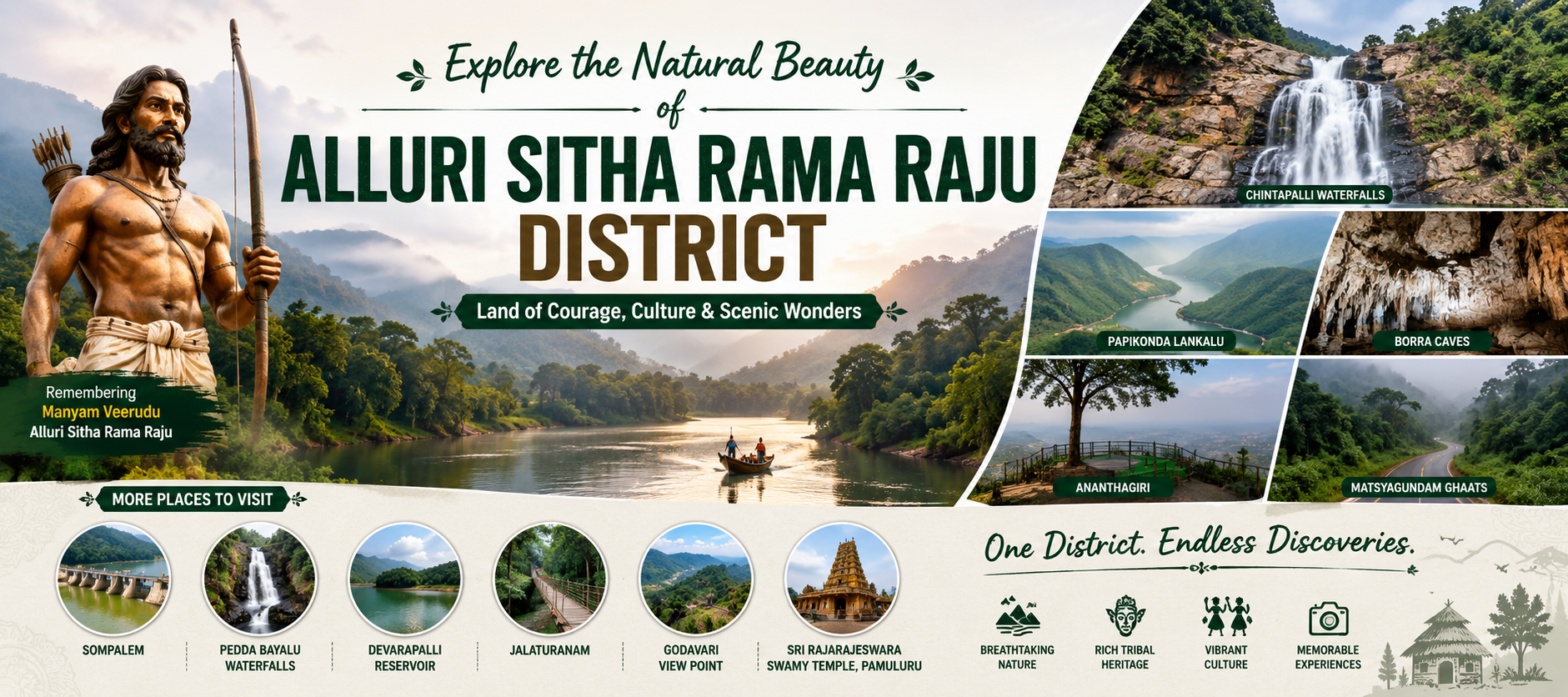
Tourist Places in ASR District

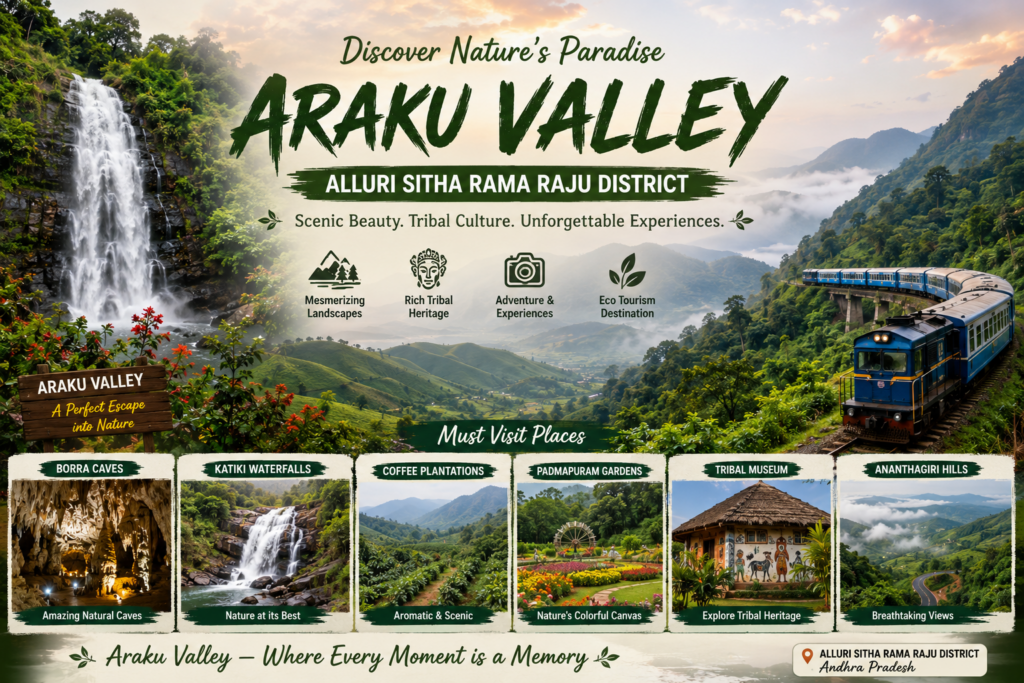
Araku Valley The Natures Paradise
Araku Valley is a major hill-station and eco-tourism destination in the Eastern Ghats of Andhra Pradesh. It is known for coffee plantations, tribal culture, waterfalls, caves, and pleasant climate. Tourism is one of the most important economic activities in the region and supports hotels, resorts, transport services, restaurants, handicrafts, and tribal livelihoods.
According to tourism studies based on Andhra Pradesh Tourism Development Corporation (APTDC) data: More than 6 lakh tourists visit Araku Valley annually. Peak tourist season is from October to February.Tourist arrivals exceeded 4.3 lakh visitors during a five-month period in the data analyzed.Estimated Annual Visitors YearEstimated Tourists Average Annual Footfall 6–8 lakh visitors Peak Season (Oct–Feb) 4–5 lakh visitorsTourism Revenue Earned The Government of Andhra Pradesh does not publish a separate annual revenue figure exclusively for Araku Valley tourism every year. However, using visitor numbers and average tourist spending, tourism experts estimate:Category Estimated Annual Revenue Accommodation (Hotels & Resorts)₹25–40 crore Food & Restaurants₹15–25 crore Local Transport₹10–20 crore Shopping (Coffee, Tribal Crafts, Bamboo Products)₹10–15 crore Entry Fees & Tourism Activities₹5–10 croreTotal Estimated Tourism Economy ₹65–110 crore per year
Natural Wonder Borra Caves
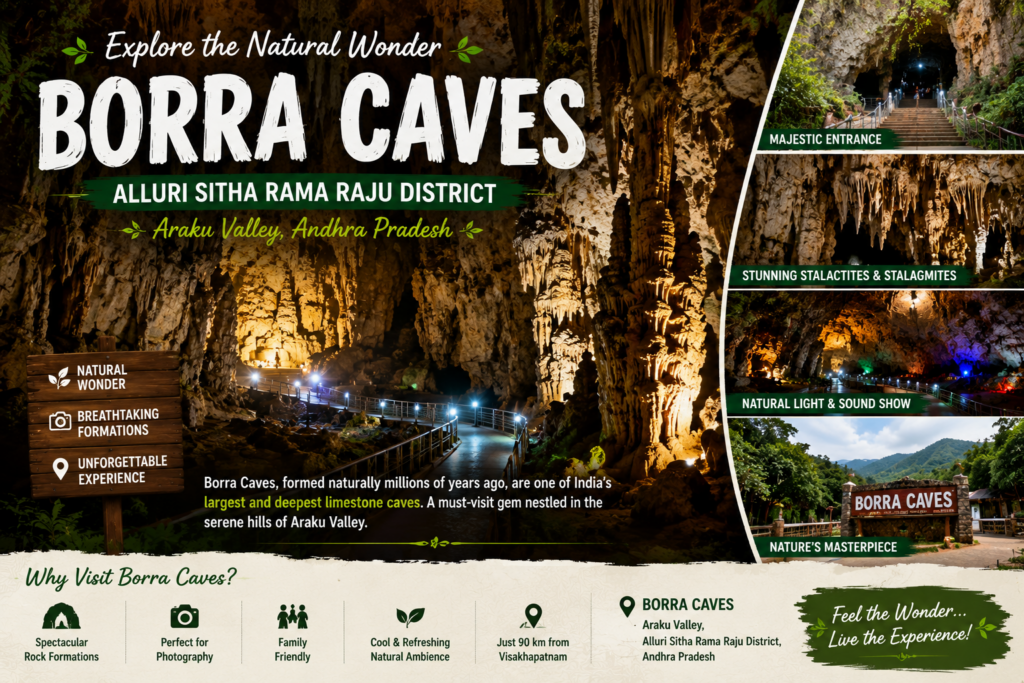
Borra Caves are among India’s largest and most spectacular limestone caves. Situated in the scenic Ananthagiri Hills near Araku Valley, these caves are renowned for their stunning stalactite and stalagmite formations, which have developed naturally over millions of years.Located approximately 700 meters above sea level, the caves offer a fascinating underground world filled with unique rock structures, natural chambers, and colorful lighting that enhances their beauty. The caves are believed to have been discovered in 1807 by the British geologist William King George.The Government does not regularly publish a consolidated annual revenue statement exclusively for Borra Caves. However, official project reports prepared under the Ministry of Tourism’s Swadesh Darshan 2.0 program provide revenue estimates.Feature Details Location Ananthagiri Hills, Araku Valley Type Limestone Cave System Age More than 1 million years old Average Entry Fee ₹60 (Adults), ₹45 (Children) Visiting Hours 10:00 AM – 5:00 PM
Around 6,000 visitors per day visit the caves.Peak seasons can see up to 12,000 visitors per day.Daily ticket collections have exceeded ₹3.7 lakh on busy days. Based on visitor traffic and ticket rates, tourism-related earnings from Borra Caves are estimated to contribute several crores of rupees annually through admissions, parking, photography permits, guide services, and associated tourism activities. Government Budget Allocation Swadesh Darshan 2.0 Project Borra Caves Tourism Development Project₹28.5–30 crore The project includes: Modern entrance plaza Improved lighting systems inside caves Beautification works Electric vehicle shuttle services Parking facilities Tourist amenities Public convenience centers Cafeterias and visitor infrastructure Improved pathways and staircasesThe Central Government sanctioned approximately ₹28.87 crore for Borra Caves development, and implementation work has been progressing under the Ministry of Tourism. The project aims to significantly improve visitor experience while protecting the cave ecosystem.
Lambasingi AP Kashmir
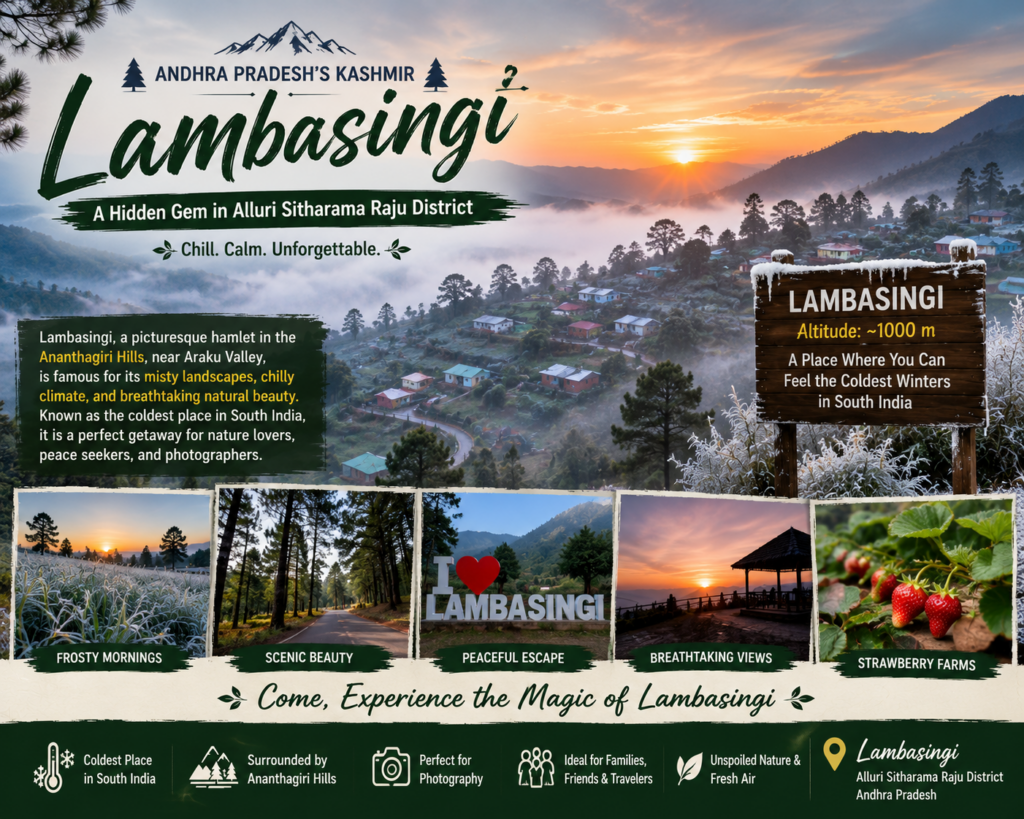
Lambasingi, popularly known as the “Kashmir of Andhra Pradesh”, is a hill destination located in the Eastern Ghats of Alluri Sitharama Raju District. It is famous for its winter fog, cool climate, coffee plantations, eucalyptus forests, and scenic viewpoints. Tourism has grown significantly since the area gained national attention for recording temperatures close to 0°C during winter.
Although the Andhra Pradesh Government does not publish separate annual visitor statistics for Lambasingi every year, tourism reports indicate that:
Thousands of tourists visit Lambasingi during the winter season (November–February). Visitor numbers increase significantly during weekends and holidays. Lambasingi is now promoted together with Araku Valley and Borra Caves as a major tourism circuit in North Andhra Pradesh. Estimated Annual Visitors Indicator Estimate Annual Visitors 1–3 lakh tourists (estimated) Peak Season November–February Peak Days Several thousand visitors per day The Government has not released an official annual revenue statement exclusively for Lambasingi tourism. However, based on tourist arrivals and spending on accommodation, food, transport, camping, and local purchases, tourism experts estimate the local tourism economy generates: Revenue Source Estimated Annual Revenue Accommodation & Resorts ₹3–6 crore Restaurants & Food Services ₹2–4 crore Local Transport & Tours ₹1–3 crore Camping & Adventure Activities ₹1–2 crore Coffee & Tribal Product Sales ₹1–3 crore Total Estimated Tourism Economy ₹8–18 crore per year
Ananthagiri Hills
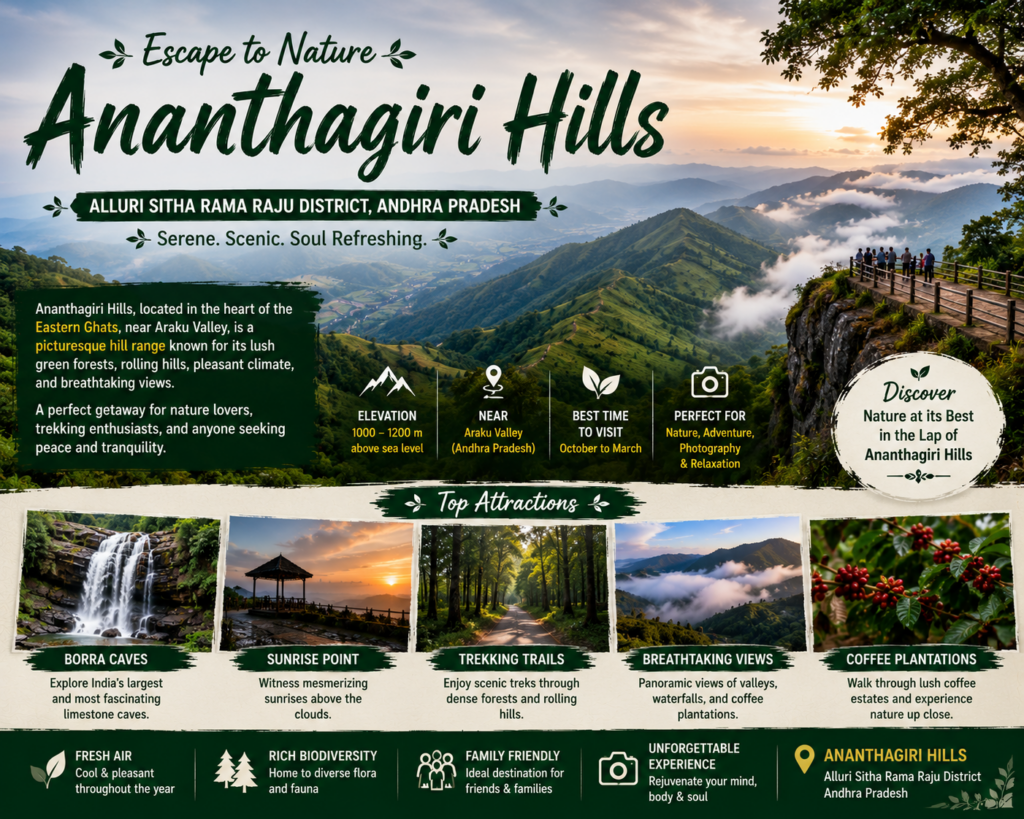
Ananthagiri Hills is one of the most scenic hill ranges in the Eastern Ghats near Araku Valley. The area is renowned for its coffee plantations, forests, trekking routes, biodiversity, and eco-tourism activities. It forms an important part of the Araku tourism circuit and attracts nature lovers throughout the year.
Separate annual visitor statistics for Ananthagiri Hills are not publicly released by the Andhra Pradesh government. However, tourism authorities consider Ananthagiri one of the major attractions within the Araku tourism region, which receives several lakh visitors annually. Visitors come primarily for:Coffee plantation tourism Nature trails and trekking Eco-tourism activities Photography and sightseeing Forest recreation Ananthagiri is also promoted as a health and eco-tourism destination due to its pleasant climate and natural surroundings. Estimated Annual Visitors Indicator Estimate Annual Visitors 1–2 lakh (estimated) Peak Season October–February Weekend VisitorsSeveral thousand during peak periods Estimated Annual Tourism Revenue The government does not publish separate yearly revenue figures exclusively for Ananthagiri Hills. Based on tourism activity, accommodation, transport, food services, eco-tourism, and coffee-related sales, the local tourism economy is estimated to generate: Revenue Source Estimated Annual Revenue Resorts & Accommodation ₹2–5 crore Restaurants & Food Services ₹1–3 crore Transport & Local Tours₹1–2 crore Eco-Tourism Activities ₹1–2 crore Coffee & Local Products ₹2–4 crore Estimated Total Tourism Economy₹7–16 crore per year
Katiki Water Falls
Katiki Waterfalls is a picturesque waterfall formed by the Gosthani River, located near Borra Caves in Alluri Sitharama Raju District. Surrounded by dense forests and hills, it is one of the most popular eco-tourism and trekking destinations in the Araku region. The waterfall drops from a height of about 100 feet and is accessible through a short trek from Gatevalsa village.
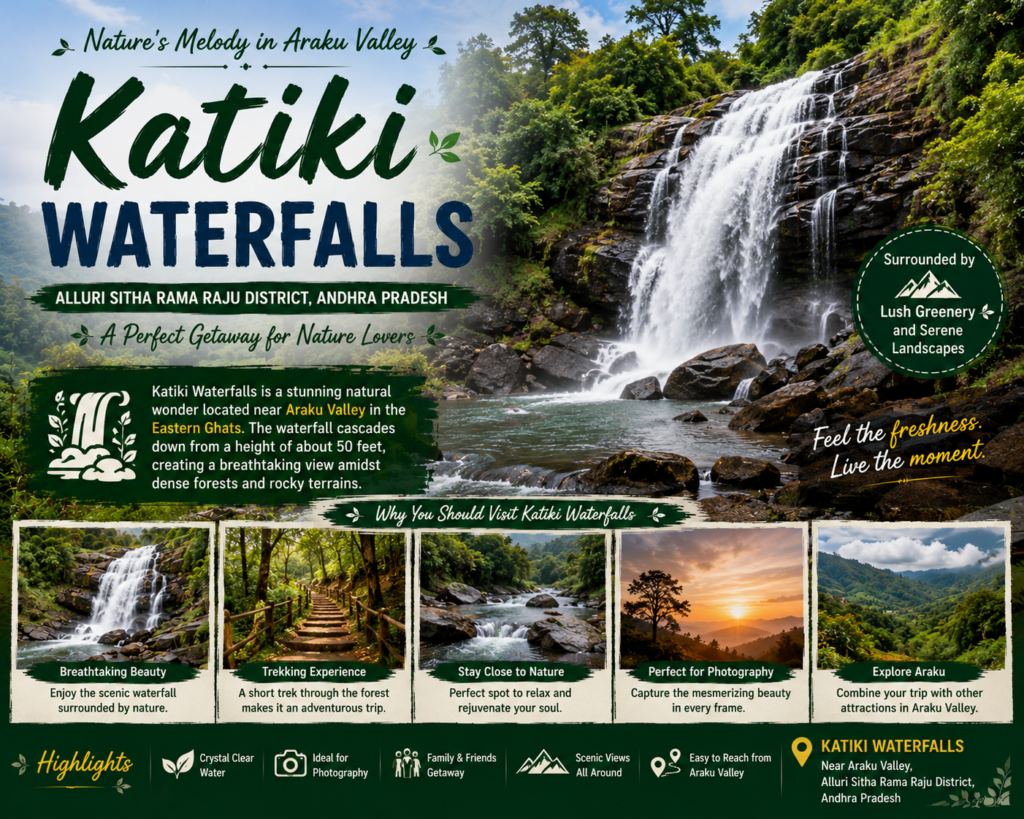
The Andhra Pradesh Government does not publish separate annual visitor statistics specifically for Katiki Waterfalls. However, tourism master plans identify Katiki Waterfalls as one of the most visited attractions in the Araku–Lambasingi tourism circuit. The site receives a significant share of tourists visiting Araku Valley and Borra Caves. Estimated Annual Visitors Indicator Estimate Annual Visitors 50,000–1,00,000 (estimated) Peak Season October–February Major Visitors Araku and Borra Caves tourists Unlike Borra Caves, Katiki Waterfalls does not have an entry ticket managed by the government. Most tourism-related income is generated through: Jeep transportation services Trekking and guide services Food stalls and bamboo chicken vendors Parking facilities Local handicraft and refreshment sales Based on tourist arrivals and local tourism activity, the estimated tourism economy generated around Katiki Waterfalls is:
Revenue Source Estimated Annual Revenue Jeep Transport Services ₹50 lakh – ₹1.5 crore Food & Local Vendors ₹25–75 lakh Guide & Trekking Services ₹10–30 lakh
Parking & Miscellaneous Services₹5–20 lakh Estimated Total Tourism Economy ₹0.9–2.8 crore per year
Tyda Nature Camp
Tyda Nature Camp, also known as Jungle Bells, is a prominent eco-tourism destination located between Visakhapatnam and Araku Valley in the Eastern Ghats. The camp is jointly promoted by the Andhra Pradesh Tourism Department and Forest Department and is known for nature-based tourism, trekking, bird watching, rock climbing, and eco-friendly accommodation. Eco-friendly log huts and cottages Trekking through dense Eastern Ghats forests Bird watching and wildlife observation Rock climbing and adventure activities Nature education and guided forest walks Scenic landscapes and tribal culture experiences Tourism Importance
Tyda Nature Camp is one of the major eco-tourism centers in the Araku region and contributes to: Employment for local tribal communities Eco-tourism promotion in the Eastern Ghats Sustainable tourism development Nature conservation awareness among visitors Revenue Earned Every Year Official annual revenue figures for Tyda Nature Camp alone are not publicly released by the Government of Andhra Pradesh or APTDC.Andhra Pradesh eco-tourism projects, including Tyda (Jungle Bells), Borra Caves, Ananthagiri Hills, Talakona, and others, generated approximately ₹2.25 crore annually during the early growth phase of the eco-tourism program. Tyda Nature Camp is one of the flagship eco-tourism projects contributing to this revenue stream.Estimated Current Revenue Based on accommodation occupancy, trekking activities, and tourist inflow, tourism experts estimate that Tyda Nature Camp may generate ₹1–3 crore annually, but this is an unofficial estimate because separate audited revenue data is not publicly available.There is no separate publicly available annual budget allocation exclusively for Tyda Nature Camp. However, the Government of Andhra Pradesh allocated:₹231.88 crore to the Tourism Department in the 2025–26 Budget. ₹63.04 crore for tourism infrastructure development and capital projects across the state. Additional funds through the Andhra Pradesh Tourism Authority for promotion and eco-tourism initiatives.