

Ancient and Early History


History Of ASR
Alluri Sitharama Raju District is a region with a rich historical and cultural legacy that stretches back thousands of years. Although the district was officially formed in 2022, its ancient history is deeply connected with the Eastern Ghats, tribal civilizations, ancient trade routes, and the cultural evolution of the Andhra region. The district’s rugged hills, dense forests, and valleys have been home to indigenous communities since prehistoric times.Archaeological evidence from the Eastern Ghats suggests that human communities inhabited this region during the Stone Age. The forests, rivers, caves, and fertile valleys provided ideal conditions for early hunter-gatherer societies. Natural cave formations such as Borra Caves indicate that the region has been occupied by humans for thousands of years. These early inhabitants depended on hunting, gathering, and primitive agriculture for survival.During ancient times, the Eastern Ghats region formed part of the broader cultural sphere of the Andhra country. While the remote hill tracts remained largely under tribal administration, lowland kingdoms such as the Satavahanas and later regional dynasties influenced trade and cultural exchanges in the surrounding areas. Forest products, medicinal plants, honey, and other resources from the hills were traded with settlements in the plains. Historical evidence suggests that tribal regions maintained varying degrees of autonomy while interacting with neighboring kingdoms.
About Alluri Sitarama Raju (ASR) District – Andhra Pradesh
A Land of Tribal Heritage and Natural Beauty
Alluri Sitharama Raju District is one of the largest tribal districts in Andhra Pradesh. The district was officially formed on 4 April 2022 as part of the state’s administrative reorganization and was named in honor of Alluri Sitarama Raju, the legendary freedom fighter who led the tribal resistance against British rule in the Eastern Ghats region.The district headquarters is located at Paderu. Known for its breathtaking landscapes, rich tribal traditions, dense forests, coffee plantations, waterfalls, and cool climate, the district is one of Andhra Pradesh’s most attractive tourism and cultural destinations.A significant portion of the district’s population belongs to various tribal communities, including the Kondadora, Bagata, Valmiki, Gadaba, and Porja tribes. These communities have preserved their unique customs, traditional attire, folk dances, languages, and festivals for generations.
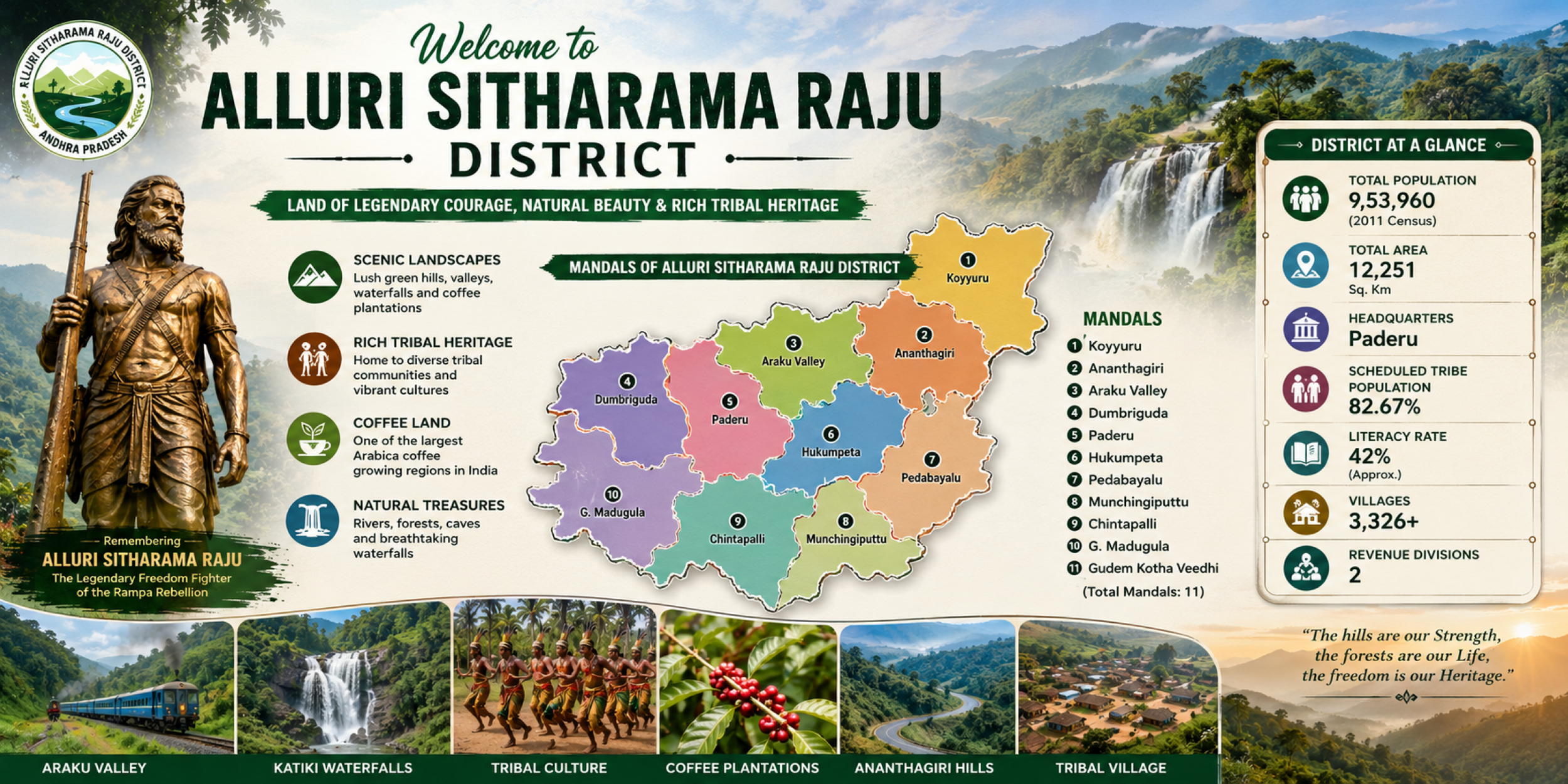
Major Towns and Population Details
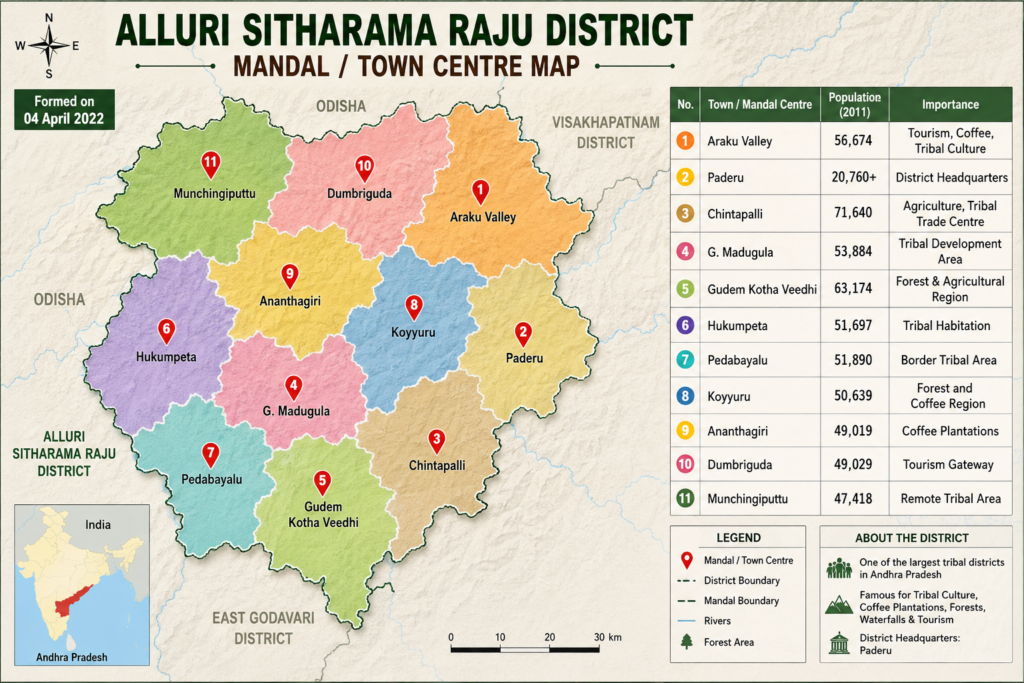
Details of ASR District
Alluri Sitharama Raju District is one of Andhra Pradesh’s largest tribal districts, known for its scenic hills, forests, coffee plantations, and rich tribal culture. The district consists of several important towns and mandal centers that contribute to its administration, economy, tourism, and tribal development.The major towns and mandal centers of Alluri Sitharama Raju District play an important role in the district’s development, tourism, and tribal welfare. Araku Valley is famous for tourism and coffee plantations, while Paderu serves as the district headquarters. Chintapalli is the largest population center and a major agricultural hub. Other important mandals such as G. Madugula, Gudem Kotha Veedhi, Hukumpeta, Pedabayalu, Koyyuru, Ananthagiri, Dumbriguda, and Munchingiputtu contribute significantly to tribal culture, agriculture, forest resources, and regional development. Together, these areas represent the cultural and economic backbone of the district.
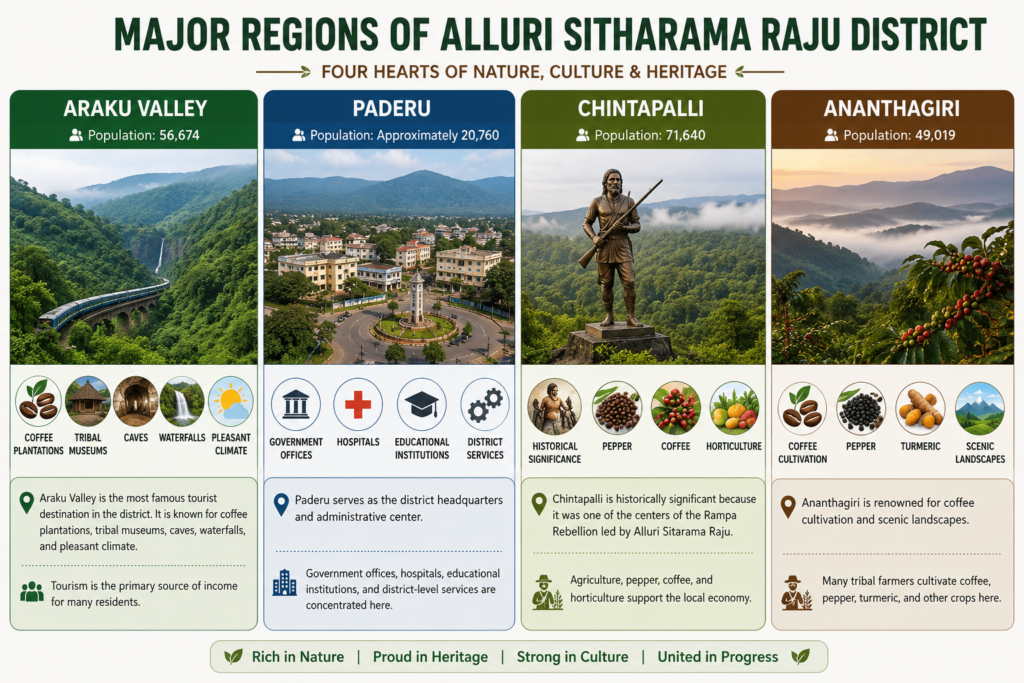
Important Town
Araku Valley Population: 56,674 Araku Valley is the most famous tourist destination in the district. It is known for coffee plantations, tribal museums, caves, waterfalls, and pleasant climate. Tourism is the primary source of income for many residents.
Paderu Population: Approximately 20,760 Paderu serves as the district headquarters and administrative center. Government offices, hospitals, educational institutions, and district-level services are concentrated here.
Chintapalli Population: 71,640 Chintapalli is historically significant because it was one of the centers of the Rampa Rebellion led by Alluri Sitarama Raju. Agriculture, pepper, coffee, and horticulture support the local economy.
Ananthagiri Population: 49,019 Ananthagiri is renowned for coffee cultivation and scenic landscapes. Many tribal farmers cultivate coffee, pepper, turmeric, and other crops here.
Economy of Alluri Sitharama Raju District
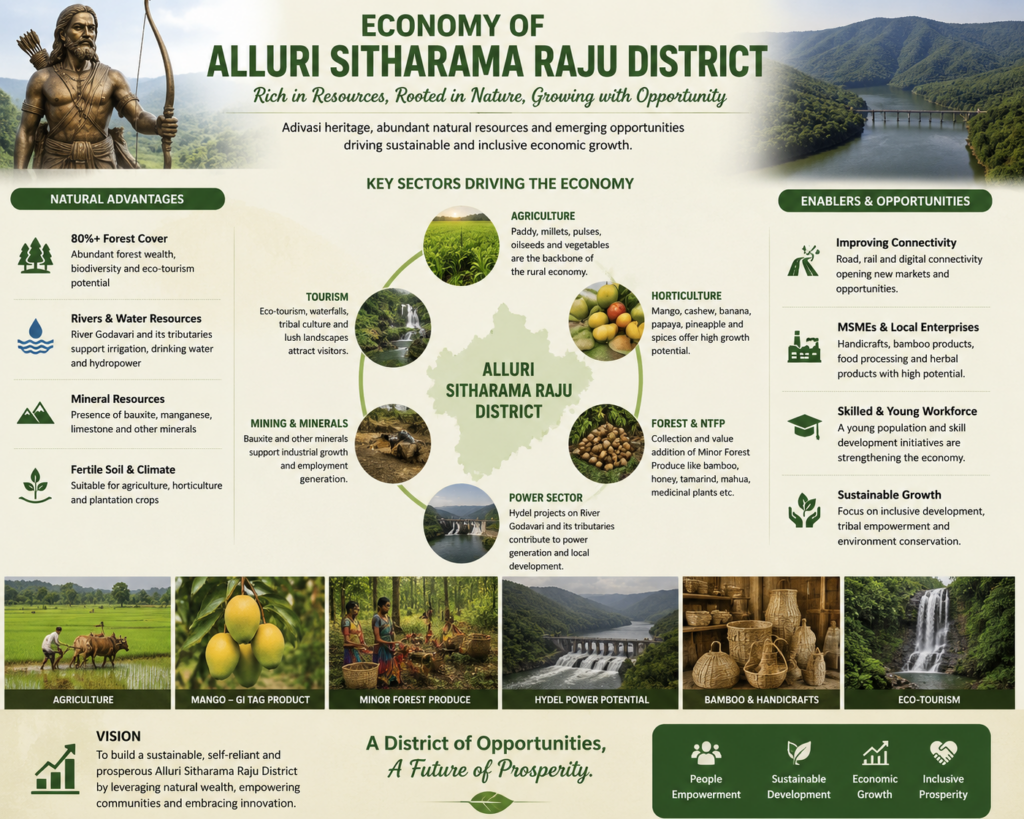
Alluri Sitharama Raju District has an economy that is largely based on agriculture, horticulture, forestry, tourism, and tribal livelihoods. The district’s rich natural resources and favorable climate support sustainable economic activities while providing employment to rural and tribal communities.Key Economic Activities🌾 Agriculture Agriculture is the primary occupation of the district. Major crops include paddy, millets, pulses, maize, turmeric, and vegetables. Farming is mainly rain-fed and supports a large portion of the population.🥭 Horticulture The district is well known for the cultivation of coffee, mangoes, cashew nuts, bananas, pepper, and other plantation crops. Araku coffee is especially famous and contributes significantly to local incomes.🌳 Forest-Based Economy Forests provide bamboo, honey, tamarind, medicinal plants, and other minor forest products. These resources are important sources of livelihood for tribal communities.⚡ Hydroelectric Power The district has several hydroelectric projects along the Godavari and Sileru river systems, contributing to Andhra Pradesh’s power generation and regional development.
Geography and Natural Features
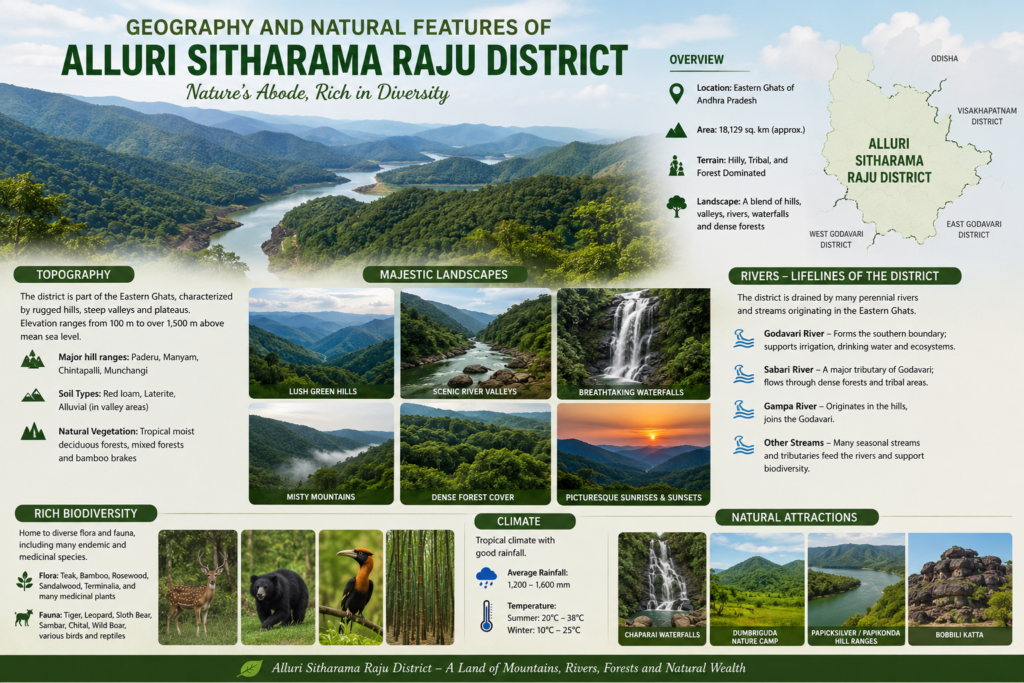
Key Geographic Features
Area: Approximately 12,251 sq. km. Terrain: Predominantly hilly and mountainous with deep valleys and plateaus. Elevation: Ranges from low river valleys to high hill regions around Araku and Paderu. Climate: Pleasant and moderate climate with cool temperatures in higher elevations and significant rainfall during the monsoon season.
Rivers and Water Resources The district is drained by major rivers such as the Godavari River, Sabari River, and Sileru River. These rivers support agriculture, drinking water supply, and hydroelectric power generation. Forests and Biodiversity Dense tropical forests cover a large portion of the district.
Forests contain valuable species such as teak, bamboo, sandalwood, and medicinal plants. The region is home to wildlife including deer, leopards, sloth bears, monkeys, and numerous bird species.
Climate and Natural Features
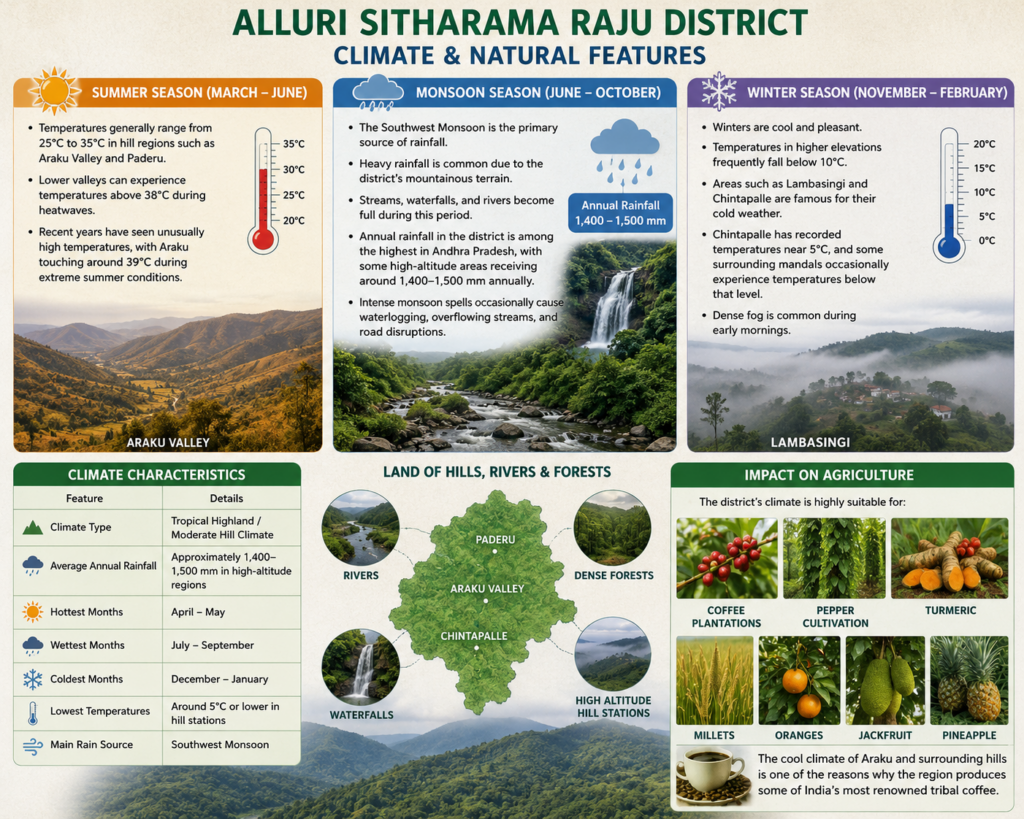
Alluri Sitharama Raju District enjoys a pleasant tropical highland climate due to its location in the Eastern Ghats. Summers are moderate in hill regions such as Araku Valley and Paderu, while monsoons bring heavy rainfall that nourishes the district’s forests, rivers, and waterfalls. Winters are cool, with places like Lambasingi and Chintapalle experiencing temperatures as low as 5°C and frequent morning fog. The district receives around 1,400–1,500 mm of annual rainfall, making it one of the wetter regions of Andhra Pradesh. These favorable climatic conditions support the cultivation of coffee, pepper, turmeric, millets, oranges, jackfruit, and pineapple, contributing significantly to the local economy and making the region famous for its high-quality tribal coffee.
high-altitude regions Hottest Months April–May Wettest Months July–September Coldest Months December–January Lowest Temperatures Around 5°C or lower in hill stations Main Rain Source Southwest Monsoon Impact on Agriculture